TL;DR: The “Gold Standard” Pasta Swap
Yes, spaghetti squash is one of the single most effective “functional foods” for managing Type 2 diabetes. It is a non-starchy vegetable that mimics the texture of grain-based pasta while containing 75% fewer carbohydrates. With a low glycemic index and high fiber content, it allows patients to enjoy “pasta” dishes without the dangerous post-prandial glucose spikes.
What is Spaghetti Squash?
Spaghetti squash (Cucurbita pepo) is a winter vegetable that, when cooked, allows its flesh to be shredded into long, translucent strands resembling angel hair pasta.
As a physician, I categorize this as a “Diabetes Miracle Tool.” Why? Because the greatest struggle for my patients is the psychological loss of “comfort foods” like spaghetti and meatballs. Spaghetti squash bridges the gap between medical necessity and culinary satisfaction.
The Glycemic Profile: Why It’s a “Green Light” Food
For a diabetic, the “Is it good?” The question is answered by the Glycemic Load (GL).
H3: Glycemic Index (GI) vs. Glycemic Load (GL)
- Glycemic Index: Spaghetti squash has a GI of roughly 20, which is exceptionally low. In contrast, traditional white pasta has a GI of 50–55 (if al dente) and significantly higher if overcooked.
- Glycemic Load: One cup of spaghetti squash has a GL of approximately 2.
Clinical Verdict: A Glycemic Load of 2 means that a standard serving has a negligible impact on your blood sugar. It is officially a “Free Vegetable” in most clinical diabetic meal plans.
Nutritional Breakdown: A Physician’s Perspective
One cup (155g) of cooked spaghetti squash provides:
- Calories: 42 (Compare to 220 calories in 1 cup of wheat pasta)
- Total Carbohydrates: 10g
- Dietary Fiber: 2.2g
- Net Carbs: ~7.8g
- Vitamin C: 9% of DV
- Vitamin B6: 8% of DV (Crucial for metabolic energy)
- Manganese: 8% of DV
The Fiber-to-Starch Ratio
Unlike potatoes or corn, which are high-starch vegetables, spaghetti squash is composed primarily of water and fiber. The insoluble fiber in the squash adds bulk to the stool and slows down the absorption of any other sugars present in your meal.
4 Clinical Benefits for Type 2 Diabetes
1. Significant Caloric Deficit for Weight Loss
Weight loss is the primary driver of Type 2 diabetes remission. By swapping 2 cups of traditional pasta for 2 cups of spaghetti squash, you save nearly 350 calories. Over time, this “invisible swap” can lead to significant reductions in visceral fat.
2. Blood Pressure Support (Potassium/Sodium Ratio)
Diabetics are at high risk for cardiovascular disease. Spaghetti squash is naturally low in sodium and high in potassium. Potassium helps relax blood vessel walls and promotes the excretion of excess salt, helping to manage “diabetic hypertension.”
3. High Antioxidant Load
The yellow-orange hue of the squash comes from beta-carotene and lutein. These antioxidants help fight the chronic inflammation that often accompanies high blood sugar levels.
4. Hydration and Satiety
Because it is over 90% water, it triggers the stretch receptors in the stomach faster than dry pasta. This sends signals to the brain that you are “full” (leptin signaling) before you over-consume calories.
The “Preparation Trap”: Keeping it Diabetes-Safe
The health benefits of spaghetti squash can be easily neutralized by poor preparation. As a doctor, I look at the “Total Meal Glycemic Impact.”
The “Red Light” Prep
- Sugary Marinara: Many store-bought sauces contain added high-fructose corn syrup.
- Excessive Saturated Fat: Heavy cream sauces (Alfredo) can worsen insulin resistance over time.
- High Sodium: Pre-packaged frozen squash dishes often exceed 800mg of sodium.
The “Green Light” Prep
- Healthy Fats: Toss with extra virgin olive oil and garlic.
- Lean Protein: Pair with ground turkey, lean beef, or grilled shrimp.
- Fresh Herbs: Use basil, oregano, and turmeric to add flavor without sodium.
How to Cook Spaghetti Squash for Best Texture
Overcooking makes the strands “mushy,” which can slightly increase the speed of digestion. We want an Al Dente texture to maximize fiber benefit.
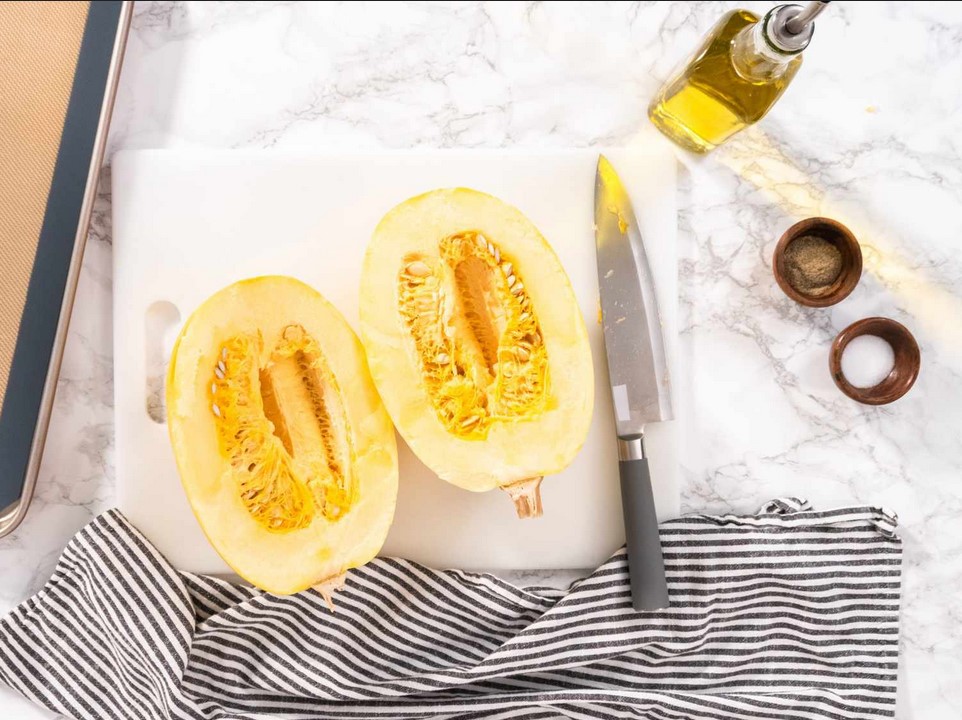
- Slice & Seed: Cut lengthwise and scoop out the seeds.
- Roast Face Down: Place on a baking sheet with a drizzle of olive oil.
- Temperature: Bake at 400°F (200°C) for 30–40 minutes.
- The “Fork Test”: If the fork slides in easily but the skin remains firm, it’s done.
- Shred: Use a fork to pull the strands away from the skin.
7-Day “Pasta-Swap” Reset
As a physician, I view this 7-Day “Pasta-Swap” Reset as a metabolic intervention. Traditional pasta is a “fast” carbohydrate that spikes insulin; spaghetti squash is a “slow” carbohydrate that allows your pancreas to rest.
By replacing wheat with squash for one meal a day, you are effectively reducing your weekly carbohydrate intake by nearly 1,500–2,000 calories without reducing the volume of food on your plate.
7-Day Spaghetti Squash Glucose Reset
The Clinical Goal
To stabilize your post-prandial (after-meal) glucose readings. If you use a Continuous Glucose Monitor (CGM), you should notice a significantly flatter line following these dinners compared to grain-based meals.
The Meal Plan
- Day 1: Classic Marinara & Turkey Meatballs
- The Base: 2 cups roasted spaghetti squash.
- The Protein: 3–4 lean turkey meatballs (homemade to avoid breadcrumb fillers).
- The Sauce: Sugar-free marinara topped with fresh basil.
- Day 2: Scampi-Style Shrimp & Garlic
- The Base: Spaghetti squash tossed in extra virgin olive oil and lemon juice.
- The Protein: 6–8 large shrimp sautéed with garlic and red pepper flakes.
- The Veggie: A side of steamed asparagus.
- Day 3: Mediterranean “Feta” Bake
- The Base: Spaghetti squash strands mixed with halved cherry tomatoes and Kalamata olives.
- The Protein: Sliced grilled chicken breast.
- The Fat: 1 oz crumbled feta cheese (provides satiety and healthy fats).
- Day 4: Pesto & Pine Nut Power Bowl
- The Base: Squash tossed in 2 tbsp fresh basil pesto (look for olive oil-based, no sugar).
- The Protein: Grilled salmon fillet.
- The Crunch: 1 tbsp toasted pine nuts.
- Day 5: Low-Carb “Pad Thai”
- The Base: Spaghetti squash used as “noodles,” sautéed with bean sprouts and green onions.
- The Protein: Scrambled eggs and firm tofu cubes.
- The Sauce: Coconut aminos, lime juice, and a dash of fish sauce (no sugar added).
- Day 6: Beef Bolognese (The Hearty Reset)
- The Base: 2 cups spaghetti squash.
- The Protein: Lean ground beef (90/10) simmered with diced carrots, celery, and tomatoes.
- The Extra: A small side of mixed greens with apple cider vinegar.
- Day 7: Carbonara “Light”
- The Base: Squash tossed with a small amount of Parmesan cheese and black pepper.
- The Protein: 2 slices of crispy turkey bacon and a poached egg on top.
The Veggie: Sauteed spinach mixed into the strands.
Physician’s Tips for Success
1. The “Texture” Hack
To prevent the squash from getting watery (which can dilute the flavor), salt the raw squash after slicing it and let it sit for 15 minutes. Wipe away the beads of water before roasting. This results in a firmer, more “pasta-like” strand.
2. Manage the Portions
Even though spaghetti squash is low-calorie, we still want to practice portion awareness. 2 cups is the “sweet spot” for most diabetics—it provides enough fiber to be full without exceeding 15–20g of net carbohydrates for the entire meal.
3. Check the “2-Hour Mark”
I recommend testing your blood sugar exactly 2 hours after your Day 1 and Day 6 meals. Compare these numbers to your historical readings after eating traditional pasta. This bio-feedback is the best motivation to stick with the plan.
The Sunday Batch-Cooking Protocol
1. The High-Efficiency Roast
Don’t just cook one; cook two or three. Since the oven is already heating up, maximize the energy and your time.
- Prep: Wash the exterior (they grow on the ground!). Slice them lengthwise.
- The Secret to “Noodles” (Not Mush): Instead of roasting face-down in a pan of water (which steams the squash), roast them face-down on a dry baking sheet lined with parchment paper. This allows the natural sugars to caramelize without making the strands soggy.
- Time/Temp: 400°F (200°C) for 35–45 minutes. You’ll know they’re ready when the skin feels slightly soft to the touch.
2. Proper Storage for Glucose Control
How you store the squash matters for both food safety and texture.
- Cooling: Let the squash cool completely before shredding. Shredding while steaming hot can cause the strands to break.
- The Container: Store the shredded “noodles” in a glass airtight container.
- The Paper Towel Trick: Place a clean, dry paper towel at the bottom of the container. It will absorb any excess moisture that leaches out over the next few days, keeping your “pasta” firm.
3. Reheating Without the “Sog”
When you are ready for your 7-day meal plan, do not microwave the squash in a bowl of water.
- Best Method: Quick sauté in a non-stick pan with a teaspoon of olive oil for 2–3 minutes. This “sears” the strands and maintains that al dente bite.
- Microwave Method: If you must use a microwave, heat it uncovered on a flat plate (not a bowl) to allow steam to escape.
Physician’s Prep Checklist
| Action | Why it Matters for Diabetics |
| Remove All Seeds | Seeds are healthy but add fat/calories you might not have tracked. |
| Label Your Containers | Ensure you eat the oldest squash first (within 5 days) to avoid mold. |
| Pre-Portion | Use a 1-cup measuring tool to divide the squash into containers so you don’t over-consume “smart carbs.” |
Why Batch-Cooking Works for Your A1c
When you are tired after work, your “willpower” is at its lowest. This is when most people reach for boxed pasta. By having pre-shredded spaghetti squash in the fridge, you’ve removed the friction. You are now only 5 minutes away from a low-glycemic, physician-approved meal.
The “Physician’s Audit”: Common Hidden Sugar Aliases
If you see any of these in the ingredient list of your spices, sauces, or pre-prepped spaghetti squash kits, the product will likely cause a glucose spike.
1. The “Ose” Family (Chemical Sugars)
These are the most common industrial sugars. They are chemically identical to sugar and hit the bloodstream instantly.
- Glucose / Fructose / Sucrose
- Dextrose
- Lactose / Maltose
2. The “Syrups” (Liquid Spikes)
Syrups are often used in dressings and marinades to give them a “glaze.”
- High Fructose Corn Syrup (HFCS)
- Rice Syrup / Brown Rice Syrup
- Malt Syrup / Barley Malt
- Agave Nectar (Often marketed as healthy, but extremely high in fructose, which stresses the liver).
3. The “Natural” Mask (Halo Effect)
Don’t be fooled by “organic” or “natural” branding. Your pancreas treats these exactly like white table sugar.
- Cane Juice / Evaporated Cane Juice
- Coconut Sugar
- Fruit Juice Concentrate
- Honey / Molasses
4. The “Starch” Trap (The Stealth Spike)
These are used as thickeners or anti-clumping agents in spice blends.
- Maltodextrin: (GI of 110—worse than sugar).
- Modified Food Starch
- Tapioca Starch / Cornstarch
How to Read a Label Like a Diabetologist
When you pick up a sauce for your spaghetti squash, follow these four clinical steps:
Step 1: Look at the “Added Sugars” Line
In 2020, the FDA requires “Added Sugars” to be listed under Total Carbohydrates.
- The Goal: 0g.
- The Limit: No more than 2g per serving for condiments.
Step 2: Check the Serving Size
Companies often list a tiny serving size (e.g., 1 teaspoon) to make the sugar count look low. If you plan on using 3 tablespoons, you must multiply that sugar count by nine.
Step 3: The “Top Three” Rule
Ingredients are listed by weight. If any form of sugar (from the list above) is in the first three ingredients, put it back.
Step 4: Watch for “Sugar-Free” Pitfalls
Some “sugar-free” items use Sugar Alcohols (Xylitol, Sorbitol).
- Clinical Note: While better than sugar, some sugar alcohols can cause digestive distress or minor glucose rises. Erythritol and Monk Fruit are generally the safest for blood sugar stability.
Summary Table: The “Red Flag” vs. “Green Flag” Ingredients
| Category | Avoid (Red Flag) | Choose (Green Flag) |
| Sweetener | Maltodextrin, HFCS, Agave | Monk Fruit, Stevia, Allulose |
| Thickener | Cornstarch, Flour | Xanthan Gum, Guar Gum |
| Acid | “Seasoned” Vinegar | Raw Apple Cider Vinegar, Lemon |
| Protein | Breaded/Processed Meats | Fresh/Whole Proteins |
The Diabetic Shopper’s Wallet Card
THE GREEN ZONE (Safe / Buy These)
These ingredients have minimal to no impact on your insulin levels.
- Sweeteners: Stevia, Monk Fruit, Erythritol, Allulose.
- Thickened by: Xanthan Gum, Guar Gum, Cellulose.
- Acids: Apple Cider Vinegar, Red Wine Vinegar, Lemon/Lime Juice.
- Aromatics: Fresh Garlic, Ginger, Turmeric, Herbs (Basil, Oregano, etc.).
- Oils: Extra Virgin Olive Oil, Avocado Oil, Walnut Oil.
THE RED ZONE (Hidden Sugar Aliases)
If these are in the top 3 ingredients, your blood sugar will likely spike.
- The “Ose” Family: Dextrose, Fructose, Glucose, Maltose, Sucrose.
- The “Syrups”: High Fructose Corn Syrup, Agave, Rice Syrup, Malt Syrup.
- The “Health” Masks: Coconut Sugar, Cane Juice, Honey, Fruit Juice Concentrate.
- The Stealth Spikes: MALTODEXTRIN (GI 110), Modified Food Starch, Cornstarch.
THE 5-SECOND “BOTTLE AUDIT”
- Check “Added Sugars”: Is it more than 2g? ➔ Put it back.
- Check the “Oses”: Does any word end in -ose? ➔ Put it back.
- Check the “First Three”: Is sugar or starch in the top 3? ➔ Put it back.
Physician’s Tip for the Aisle
When you are looking at a new sauce or seasoning for your spaghetti squash, don’t look at the front of the box. The front is marketing (e.g., “Natural,” “Healthy,” “Low Fat”). The back is medicine.
The Total Carbohydrate count minus the Dietary Fiber gives you your Net Carbs. For a sauce, you want that number to be as close to zero as possible.
FAQ: Frequently Asked Questions
Can I eat spaghetti squash every day?
Yes. From a clinical perspective, there is no downside to daily consumption, provided you vary your protein sources. It is an excellent way to maintain a consistent “glucose floor.”
Does it taste like real pasta?
It has a mild, slightly nutty flavor. While the texture is “crunchier” than wheat pasta, it absorbs the flavor of whatever sauce you use perfectly.
Is the “Net Carb” count safe for Keto Diabetics?
At roughly 7–8g of net carbs per cup, it is one of the most keto-friendly winter squashes available—much safer than butternut or acorn squash.
The Medical Verdict
Spaghetti squash is a superior dietary tool for anyone managing blood sugar. It allows for high-volume eating, provides essential micro-nutrients, and effectively replaces the most common “glucose-spiking” food in the Western diet: pasta. If you are struggling with high A1c levels, replacing one pasta meal per week with spaghetti squash is a clinically sound starting point.
References
- Non-starchy Vegetables and Glycemic Control.
- Full Nutrient Profile: Squash, winter, spaghetti, cooked.
- The Role of Dietary Fiber in the Management of Type 2 Diabetes.
- Bioactive Compounds in Cucurbitaceae and Their Potential in Managing Metabolic Syndrome.
- https://www.frontiersin.org/articles/10.3389/fnut.2022.845014/full
- Dictionary of Added Sugars and Nutrition Labeling.